
When the educational focus in schools shifted heavily towards STEM (Science, Technology, Engineering, and Math) subjects, some educators felt that the approach came at the expense of art. It didn’t take long for STEM to become STEAM (add Art), and schools began designing STEAM labs. These unique learning spaces allow teachers to incorporate a multi-discipline approach that requires creativity alongside critical thinking and problem-solving.
Thank you for reading this post, don't forget to subscribe!
TIME TO ENVISION: Student stations are modular, allowing for the project-based, multimodal learning outcomes that STEAM requires
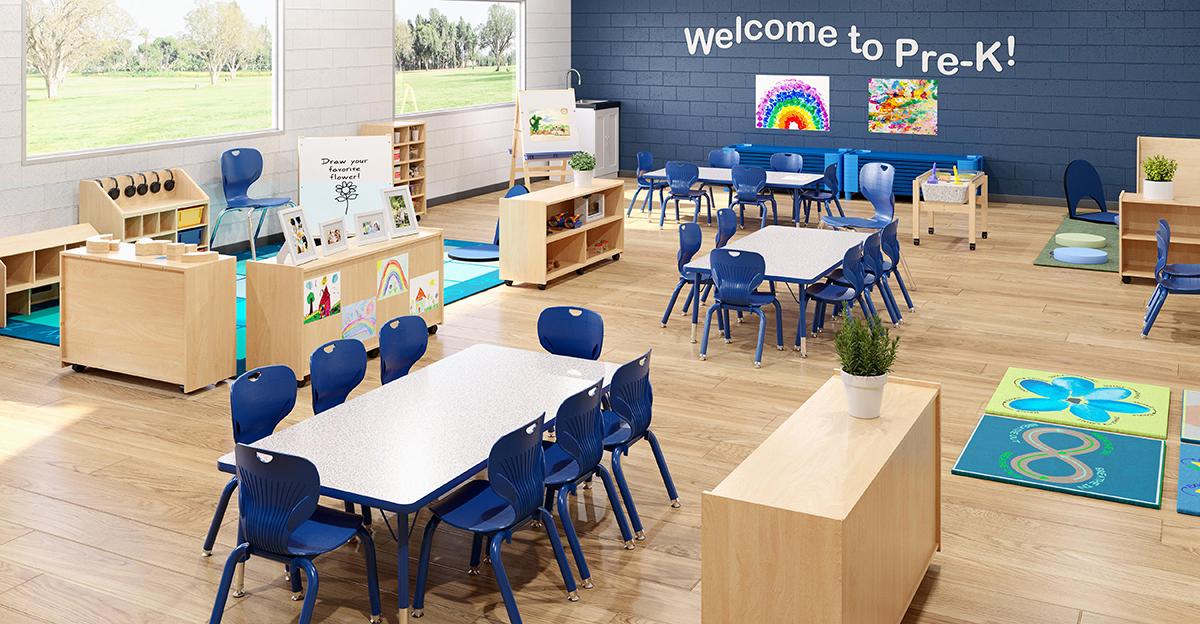
STEAM learning involves a different concept of what classrooms should look like. In some cases, STEAM is generated from the art program out, with teachers finding ways to tie their curricula to the STEM concepts outside their doors. But to do this effectively, the art room needs to change.
In a STEAM lesson, technology becomes a prominent tool. Elementary students are utilizing simple graphics programs to create art, but STEAM goes much further than that. A typical STEAM project would also require the creation of visual representations of the data generated through an interdisciplinary math or science project. The activity of communicating project data in a creative manner enables better communication to a group.
Graphic artists are not only using technology in their daily lives but often creating technology themselves!
Computer science and programming often finds itself at the crossroads between data and art. Students that can demonstrate computer programming skills to resolve problems as part of a vigorous STEAM curriculum will enjoy a bright future.

Now let’s take a look at what the modern STEAM learning space can look like:
Although fun hands-on activities still abound in these classrooms, a STEAM lab requires technology. Expensive devices are cared for during demonstrations and trials, yet are also readily available for when students need to work with the data gathered and create